
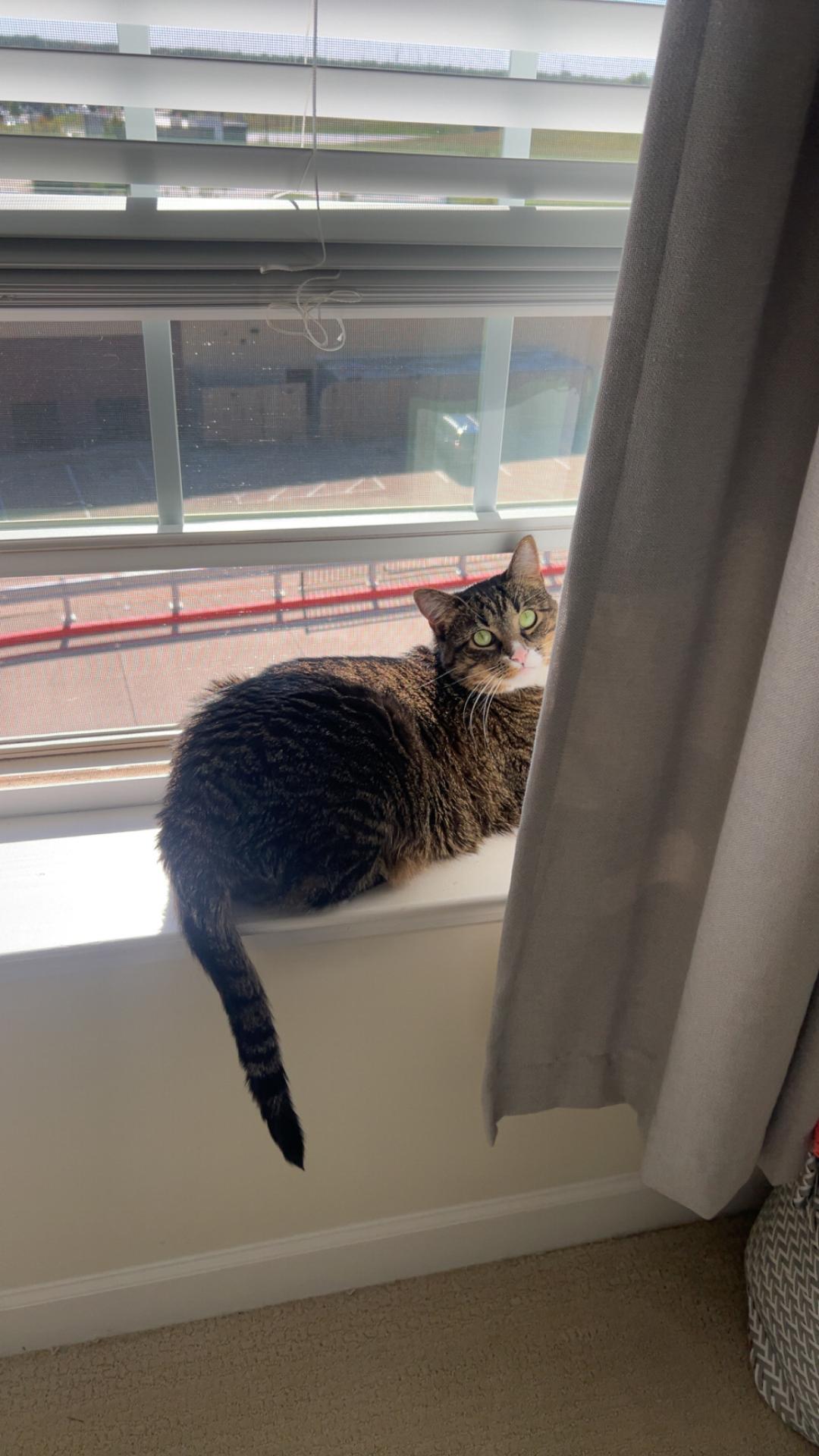
 Meet Prince! Prince is a four-year-old tabby cat adopted from Second Chance in Columbia. He presented to the clinic for inappropriate urination outside of the litter box. Prince had adjusted well after adoption and had no prior history of urination issues. There were no major changes to his home environment or routine, with the exception of his owner starting a new job. Shortly after this transition, his owner discovered urine outside of the litter box and initially suspected a urinary tract infection.
A full diagnostic workup, including urinalysis, was performed and returned normal results, ruling out medical causes such as a urinary tract infection. Prince was otherwise found to be in good health, and the inappropriate urination was determined to be behavioral, likely related to anxiety and environmental stressors. One possible contributing factor discussed was exposure to unfamiliar scents, such as other animals or veterinary-related smells associated with the owner’s workplace.
To address anxiety, Prince was started on gabapentin. Additional interventions included the use of Feliway pheromone diffusers and relocating the litter box to the area where Prince had been urinating. Environmental enrichment strategies were also implemented to reduce stress and increase mental stimulation, including increased playtime, interactive toys, and providing boxes and hiding spaces. These interventions resulted in temporary improvement, as Prince resumed using the litter box briefly before returning to urinating in the corner.
After exhausting multiple environmental and behavioral strategies, the owner elected to restrict Prince’s access to a smaller, more controlled area of the home while he remained on gabapentin. Within two weeks of reducing his available space, Prince began consistently using the litter box again. His environment was then gradually expanded, and he continued to urinate appropriately. Eventually, Prince was given full access to the home without recurrence of inappropriate urination.
Although the urination issue was resolved, the owner reported new concerns, including Prince biting after the owner returned home from work, as well as weight gain. Additionally, administering Gabapentin became increasingly difficult. Due to these challenges, a discussion was initiated regarding transitioning Prince from Gabapentin to Fluoxetine for longer-term anxiety management.
This case highlights the importance of first ruling out medical causes when a cat presents with inappropriate urination. Although Prince’s condition was ultimately anxiety-related, diagnostic testing was essential to ensure there were no underlying health concerns. Once medical causes were excluded, targeted behavioral, environmental, and pharmacologic interventions could be implemented. Prompt veterinary evaluation and a stepwise approach to treatment were key in resolving the behavior and supporting Prince’s overall health and well-being.